 It has been over fifty years since President Nixon’s famous “War on Drugs” initiative, which has shaped both the prevailing U.S. myth related to addiction and the cultural perception of those struggling with what the DSM V labels substance use disorder. Imposing strict sentencing laws and increasing law enforcement in reaction to a multilayered psychospiritual public health crisis has only exacerbated the issue. The National Institute on Drug Abuse (2020) affirmed that 85% of the prison population has an active substance use disorder or has been incarcerated for a crime involving drugs or drug use. The heartbreaking reality is that this patriarchal approach has been shown to have little to no positive effect on the rates of drug addiction and ignores many of the deeper and more pervasive forces underlying the culture of substance addiction. In fact, this domination-based method of addressing the addiction crisis in the U.S. is linked to increased mortality rates from overdose (Pearl, 2018), not to mention the racial disparities in terms of incarceration rates and the exorbitant economic impact on the families of the incarcerated and the country itself. Since 1971, the War on Drugs has cost the United States an estimated $1 trillion, and in 2015, the federal government spent approximately $9.2 million every day to incarcerate people charged with drug-related offenses, more than $3.3 billion annually (Pearl, 2018). Maté (2010), mind-body physician and addiction expert, prefaced his bestselling book In the Realm of Hungry Ghosts by highlighting the United States’ progress paradox, that America “leads the world in scientific knowledge in many areas but trails in applying that knowledge to social and human realities” (p. 1). This misunderstanding of addiction and the addicted begs for a new viewpoint—a depth perspective.
The mainstream attitude that equates addiction with criminality tends to overlook some of the more foundational and influential components of addiction, those related to individual and cultural wounding. Maté (2010) reported through his interviews and experiences with his Downtown Eastside patients in Vancouver that those who turn to substances do so, at least initially, as a means to fill a void—to bridge the vast expanse that they experience between disparate parts of themselves, and between themselves and the world. This void, in fact, shows up over and again through the stories of the individuals in Maté’s book. Maté (2010) related a twenty-seven-year-old sex worker’s experience of her first time doing heroin: “It felt like a warm, soft hug,” she recalled (p. 165).
Mythically speaking, the void can be seen as a qualitative representation of the Mother archetype. In The Archetypes and the Collective Unconscious, C.G. Jung (1959/1990) outlined a plethora of characteristics of the Mother archetype. He highlighted her dual nature as “the loving and terrible mother,” personified by the paradoxical Kali. Jung clarified that “all symbols can have a positive, favorable meaning or a negative, evil meaning” (⁋ 157), expressions that can be altered by our relationship to her. Jung outlined the Mother archetype’s associated qualities as those related to nurturing and solitude—sympathy, wisdom, transformation, rebirth, and so on—while at the same time connoting the hidden—the dark, the depths, the abyss, and anything that devours, seduces, and poisons (⁋ 158), to name a few. From a cultural standpoint, one could say that in a patriarchal society, the disenfranchised Mother archetype shows up through a pervasive, indefinable void—a persistent, underlying vibrational hum, an elusive yearning for reconnection with the archetypal values she represents. In this context, addiction arises out of a distorted, sensation-driven attempt to feed that void. When our relationship to sensation is filtered through the extremes of addiction culture and one is unable to connect meaningfully to the archetypal Mother, mothering gets projected onto substances, as seen in the words of Maté’s client above.
Personifying the culture of addiction and certain aspects of its psychological type offers a way to better understand the deeper, animate layers of this complex American crisis. In an examination of America’s addiction culture, one can’t deny its magnetic pull toward the sensate object. Victims of this epidemic often seem dominated by extraverted sensation, no matter where the function sits in their psyche. Jung (1921/1976) illustrated the extraverted sensation function (Se) by describing the Se-dominant individual:
 As sensation is chiefly conditioned by the object, those objects that excite the strongest sensations will be decisive for the individual psychology. The result is a strong sensuous tie to the object. Sensation is therefore a vital function equipped with the strongest vital instinct. Objects are valued insofar as they excite sensations, and, so far as lies within the power of sensation, they are fully accepted into consciousness whether they are compatible with rational judgments or not. The sole criterion of their value is the intensity of the sensation produced by their objective qualities. (⁋ 605)
With extraverted sensation in excess as the primary function of an addiction culture, John Beebe’s eight-function, eight-archetype extrapolation of Jung’s original four-function typological model can be used to uncover how and where this function expresses itself unconsciously. By discerning addiction’s conscious orientation to the world, one gets a glimpse into how this type perceives and functions in ways that may seem foreign to one’s own conscious orientation. Deepening into the less conscious functions, one gets the opportunity to notice what is happening in the shadow and is offered potential paths to healing and transformation.
The Addiction-Prone Personality as Se Dominant
When observing behaviors present in the addiction process, what is most apparent is that the addicted psyche seems to be compelled by an overwhelming aesthetic drive characteristic of extraverted sensation, but a wounded manifestation of this natural predisposition expressed via addictive tendencies. Through Se-driven addiction’s continual need for instant gratification, the orientation toward the object becomes distorted, demonstrative of a type who has “disappear[ed] behind the sensation” and thus devolved into a “crude pleasure seeker” bound to the sensate object (Jung, 1921/1976, ⁋ 608). The relationship between subject and object, something that in its balanced expression has the potential to be aesthetically satiating, instead acts as a parasitic reciprocity. The individual becomes a puppet for the sensate object, and the object is “ruthlessly exploited and squeezed dry, since now its sole use is to stimulate sensation” (⁋ 608).
In In the Realm of Hungry Ghosts, Maté (2010) described the nuances of an “addiction-prone personality,” asserting that “people are susceptible to the addiction process if they have a constant need to fill their minds or bodies with external sources of comfort” (p. 236). He also elucidated that “a person with inadequate self-regulation becomes dependent on outside things to lift his mood and even to calm himself if he expresses too much undirected internal energy” (pp. 236-237). Similarly, Jung (1921/1976) described the extraverted sensation type as “merely desirous of the strongest sensations, and these, by his very nature, he can receive only from the outside” (⁋ 607). Jung continued, “What comes from inside seems to him morbid and suspect” (⁋ 607). Maté’s image of the addiction-prone personality overlaps with Jung’s description of an extraverted sensing personality in excess.
At this juncture, misinformed observers might chastise the individual, criticizing them for a lack of willpower. This criticism is common toward those struggling with addiction in the U.S. But from a Jungian perspective, addiction is not a problem that can be eradicated through conscious will. In the polarized expression of extraverted sensation, per Jung (1921/1976), this type is “in danger of being overpowered by the unconscious in the same measure as he is consciously in the grip of the object” (⁋ 609). In this instance, rational judgment fails to be enough to offset one’s altered relationship with sensation, so its unconscious expression becomes compulsive (⁋ 609), suggesting a need to explore the crisis through relationship with its unconscious, or shadow dynamics. Shumate (2021) argued that in order to reclaim our instinctual natures, “we have to look inside ourselves for instinct, which has its source in the archetypal unconscious” (p. 84), and Beebe’s eight-function typological model offers clues on where to look. According to Beebe’s model, an addiction culture with a preference for heroic extraverted sensation will have introverted intuition (Ni) in its anima/animus fourth position, introverted sensation (Si) in its fifth as the opposing personality, and extraverted intuition (Ne) as demon/daimon, the function furthest from consciousness (i.e. ESTP or ESFP).
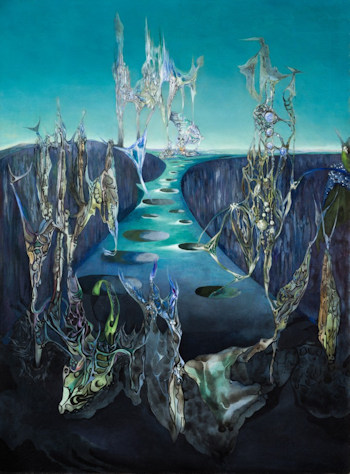
The Role of Memory and the Body (Si)
Addiction is intimately related to pain and trauma, predominantly that experienced in early childhood and adolescence. In Beebe’s eight-function model, introverted sensation is the opposing personality to dominant extraverted sensation. In a struggle for dominance, painful Si memories hijack one’s moods, actions, and decisions from behind the scenes, deceptively coloring one’s present with the tinge of the heartbreaking past. Painful unprocessed flashbacks intrusively break into and warp conscious processes. It is not difficult to imagine then, the relief, allure, and indispensability that come with the pleasure aspect of substances, especially when this is one’s only known coping mechanism. Although vicious when alienated, this shadow function also compensates for the inflation of the predominant heroic function, extraverted sensation, and reveals a possible channel for healing. Lovingly and safely confronting these memories, sifting out what is essential from the past in order to move forward, allows one to access the regenerative aspects of the inferior function, using the past to inform the present so as to not unconsciously repeat mythic motifs of generational trauma.
When dissociation has been a trusted protector from traumatic experiences, the Ni animus fantasy life offers an available means of survival. Perhaps there is safety within this dissociation, so bypassing one’s suffering via dissociative drugs becomes a familiar sort of relief and comfort. But when this defense becomes harmful, as it inevitably does, severing one from one’s own body, the need emerges for a new relationship with this wounded response to introverted sensation. Introverted sensation is connected to the body and one’s internal monitoring of the bodily environment. A complex or trigger is a powerful affective experience, producing an intense emotional reaction felt in the body. “That there is a relationship between complexes and bodily processes is beyond doubt” (Von Franz, 1988, pp. 3-4). By noticing how a trigger feels in the body, one becomes aware of the unconscious aspects of a complex, allowing the trigger to serve as a divine warning that something neglected needs care and attention. If one can follow these cues and tend to bodily needs, relating to introverted sensation in a new way, its innate instinctual intelligence can be a guide to healing the deep woundedness that underpins the addicted psyche.
Stress and the Ni Anima
One who is sensuously motivated may experience a profound amount of resistance when first going into deep interiority. But from a depth perspective, labeling one resistant is not enough; something lurks beneath the surface of discomfort. Maté’s (2010) research uncovered that “the effects of early stress or adverse experiences directly shape both the psychology and the neurobiology of addiction in the brain” and that all addictions can be “traced to painful experience” (p. 37). Marie-Louise Von Franz (1971) said that “the sore spots generally are connected with the inferior function” (p. 14), so a closer look at this tender reactivity reveals significant sources of shame and inadequacy, parts that the self-regulating psyche is trying to fiercely protect. If one’s inferior function is involved in turning inward to process experiences, as is characteristic of an introverted intuitive anima, and if the experiences are painful, the repellent quality associated with the anima/animus function is exacerbated. When using introverted intuition, one’s subjective experience filters the external world, so if one’s internal images are colored by traumatic or painful experiences, those inner images might serve as a reminder of one’s perceived unworthiness, pain, and distress.
Marie-Louise von Franz (1971) described the inferior function as “represent[ing] the despised part of the personality, the ridiculous and unadapted part, but also that part which builds up the connection with the unconscious and therefore holds the secret key to the unconscious totality of the person” (p. 10). It is these less desirable attributes that we are more likely to project, further perpetuating self-marginalization by marginalizing the other. The inferior introverted intuition within addiction’s extraverted-sensation-focused typology can be expressed as suspicion and a denial of consensus reality, qualities analogous to repressed Ni projected onto the outer world, submerging consciousness.
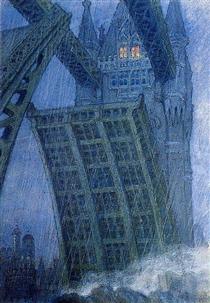 One uses substances in the hopes of becoming more engaged in the here-and-now enjoyment of life. It is the natural driving force of extraverted sensation. Jung (1921/1976) wrote, “to feel the object, to have sensations and if possible enjoy them—that is the constant aim” (⁋ 607). But as Von Franz (1971) explained, “If you overdo one of the conscious attitudes it becomes poor and loses fertility; also, the unconscious counter function, the opposite, encroaches upon the main function and falsifies it” (p. 19). One can see how valuable it would be to simply feel something after having to constantly dissociate from reality, anesthetizing a proclivity toward the sensing function in order to survive. But in an act of enantiodromia, one’s attempts at being in and fully experiencing life (Se) turn into an experience of deluded and dissociative reality (Ni), further perpetuating the divide that the addict is so desperately seeking to bridge.
As Von Franz (1971) avowed, “the inferior function brings a renewal of life if one allows it to come up in its own realm” (p. 15). The inferior function is often both the wound and the salve. In the symbolic realm of introverted intuition, the richness of the archetypal image of void, a symbol unequivocally present in each person’s experience of addiction, proves ripe for the unfolding. Allowing the anima/animus to be heard on its own terms, this Other proves to be the gatekeeper at the edges of the psyche.
Demonic Ne as Sabotage or Salve
When introverted intuition is repressed and projected, the outer world becomes an unreliable fantasy that then victimizes the individual. According to Sandner and Beebe (1982/1995), “The pressure on the inferior function may activate its shadow, the ‘demonic personality’” (as cited in Shumate, 2021, p. 87). Demonic extraverted intuition may unconsciously express as escapist tendencies, magical thinking, or paralysis (Shumate, 2021, p. 189), which in personality possession can turn one into the opposite of oneself. This desire to escape is all the more enticing when one is haunted by past pain. Future possibilities, the hallmark of extraverted intuition, look bleak and uninviting, provoking anxiety and paranoia. Under the grip of addiction, the concreteness of the sensing function turns into an inability to participate in moment-to-moment reality, undermining one’s natural sensate drives.
According to Beebe’s model, what once expressed as demonic has the potential to express as daimonic if a higher level of integration and fluidity between functions is achieved. James Hillman (1992) related one’s daimon to one’s calling, recognizing daimons as protectors who guard our fate, guide it, probably are it (p. 50). If one can tap into the daimonic potential of extraverted intuition, this function becomes an opening into a new approach toward life, nurturing a profound spirituality. In this way, through transformative processes, the daimon moves us toward fate, calling, purpose, potential. The key is to come into relationship with the daimon “without losing access to [the] dominant function,” to make space for and hold the tension between oppositional functions (Shumate, 2021, p. 151). This can offer new promise in relating to and experiencing sensation, such as learning who we are through our sensate experiences of who, what, and how we love. Extraverted intuition offers ideational expansion where extraverted sensation vision has become addictively narrowed to the object. This “serendipitous transformation” offers the possibility of shifting a denial of consensual reality into seeing the world as ensouled, revealing a spiritual dimension to the tangible sensate experience (Shumate, 2021, p. 152).
The Mother Archetype
At the personal level, this unconscious preoccupation with and drive towards the void can be viewed as a desire to return to the womb, a place of safety and security, where one’s essential survival needs are met. Similarly, a longing for the void to be filled can be seen as a need for reimagining one’s childhood nurturing process, to re-learn how to Mother one’s self, to tend to one’s neglected inner child. A pervasive haunting void in one’s life signals the need to go inward. The darkness of the void forces one to use one’s intuitive and instinctual senses, to learn how to see in the dark, to sniff out danger, to feel into the vulnerable spots that require protocols, edges, and boundaries. This matrix of emptiness offers fertility and potential if it is related to meaningfully. To be attentive to our emptiness is to be forced into our deep interiority—the realm of the Mother—and it is she who incites and nudges us to participate in the necessary life/death/life process, re-rooting us in the seasons and cycles of Nature. She is the realm of connection and relation, the realm of wholeness. Her life, death, and renewal process, although painful, is crucial if one is to let one’s old ego identity die, making room for the birth of a new one.
Paradoxically, the more one avoids the void, the more prevalent and destructive it becomes. In its distorted expression, the Mother womb becomes engulfing, suffocating, a darkness one cannot escape. There is no separation between subject and object and no distinction between self and other. The continuum and cyclical nature of void energy becomes a vortex one is helplessly and passively sucked into. Maté (2010) explained that because of a lack of differentiation, addicts “absorb and take personally the emotional states of other people” (p. 408). This boundarylessness indicates possession by the Mother, provoked through her personal and cultural subjugation. Having no limits becomes a barrier to personal inviolability and identity, to defining one’s interpersonal edges, to standing for, fighting for, and asserting one’s differentiated well-being.
It would seem then that one possible pathway toward healing addiction culture is in a renewed relationship with the archetypal Mother, through descent and transformation. “The Mother archetype is not the problem as such, it is a matter of how and where she enters our lives,” said Rossi (2022, p. 114). The Mother requires sacrifice; she sacrifices her current form to birth a new potential. “Our task is not, therefore, to deny the archetype, but to dissolve the projections, in order to restore their content to the individual who has involuntarily lost them by projecting them outside himself” (Jung, 1959/1990, p. 84, ⁋ 160).
![Pyle, H. (1909). Once it chased Dr. Wilkerson into the very town itself.]()
 Where Westernization Goes, Addiction Follows
Drawing on Jung, Shumate (2021) attributed crises such as drug addiction to a cultural disconnect from our instincts and “a society that colludes with the individual’s inflated personality” (p. 83). Paradoxically, it is the broader culture in which addicts are embedded that reinforces an inflated sense of extraverted sensation to be accepted. In mainstream Western culture, we laud extraverted sensation, holding individuals to unrealistic aesthetic standards, and repetitively produce the next new invention that might temporarily captivate our senses. We are continually seeking out stimulation, which counterintuitively ends up distracting us from the here-and-now connection that the soul is yearning for. Maté (2010) suggested that “a sense of deficient emptiness pervades our culture.” He explained that “the drug addict is more painfully conscious of this void than most people and has limited means of escaping it” (p. 38). With endless sources of overstimulation and distraction, “the rest of us find other ways of suppressing our fear of emptiness” (p. 38).
One could say that the West is obsessively attached to upholding a fantasy image of reality completely detached from subjective experience, and this is the perfect hook for the repressed introverted intuition of addiction, essentially inviting compulsive reactions. Introverted intuition by nature has an ability to pick up and draw on the unconscious, and in the anima/animus position, it is “directed toward the unconscious, whether it appears on the inside or the outside” (Von Franz, 1992, p. 11). Perhaps when this inferior function is activated, the addict is more tuned into and therefore more affected by the larger culture’s unconsciousness, our disowned cultural shadow.
Maté (2010) made a case for a broad understanding of addiction, arguing that culturally, addiction is not reserved for society’s outcasts but is inherent in a society organized around the myth of more. The etymology of addiction reveals that it originated with the Roman concept of addictus, a term for a debt slave, or a person forced to work to pay back a debt. The concept speaks to our modern sense of addiction as “enslavement to a habit” (p. 135). Under this premise, Maté defined addiction as “any repeated behavior, substance-related or not, in which a person feels compelled to persist, regardless of its negative impact on his life and the lives of others” (p. 136). Every personality type has an extraverted sensing function, and each of us has likely had an addictive proclivity toward something, whether it be work, exercise, alcohol, social media, food, nicotine, or the like. In his 2006 State of the Union address, George W. Bush stated, “Here we have a serious problem, America is addicted to oil” (as cited in Maté, 2010, p. 268). Maté (2010) amplified this idea:
The United States finds itself dependent on a resource from abroad; Hence, it needs to develop other sources of energy—drilling for oil in protected nature reserves, for example. So the problem is not the addiction itself only that the supply of the substance in question may be jeopardized: typical addict’s logic, of course. (p. 268)
With this cultural ideology, it should come as no surprise that where Westernization goes, addiction follows. In its failure to address the cultural shadow of excess—the unchecked cult of progress that the U.S. was founded upon—mainstream society projects this shadow onto those struggling with substance addiction. In The Spiritual Paradox of Addiction, Bedi and Pereira (2020) drew out this psychological dynamic of cultural shadow projection: “In a culture intoxicated with materialism, narcissism, and the exploitation of the earth and the feminine principle, it is the addict who carries the proverbial scarlet letter ‘A.’ He embodies the shadow self of the collective and the culture” (p. 34).
Shumate (2021) explained that “the ego tries to prevent us from seeing our projections” (p. 57), so we stigmatize and demonize addicted individuals in an attempt to keep our cultural ego protected from the humbling lunar illumination of shadow. Per Shumate, “negative projections are a way of denying our own deficits, and thus they keep us blind to ourselves and others” (p. 14). Frankly, stigmatizing others is a way to give ourselves an easy out, to say, “Hey, look at that girl over there. She’s the real addict!” thus shifting the blame from the culture to the individual and marking the individual as deficient. Those struggling with substance addiction, then, are forced to hold the weight of our repressed cultural shadow, and the more adamantly we look the other way, the more disruptive the shadow becomes. This is not to say that those wrestling with addiction should not have to take responsibility for harm caused but to suggest that we live in a culture organized around an ethos that lends itself to and perpetuates addiction. In order for the addiction epidemic to be properly addressed, the wider culture will first have to be courageous enough to acknowledge and come face-to-face with its own shadow.
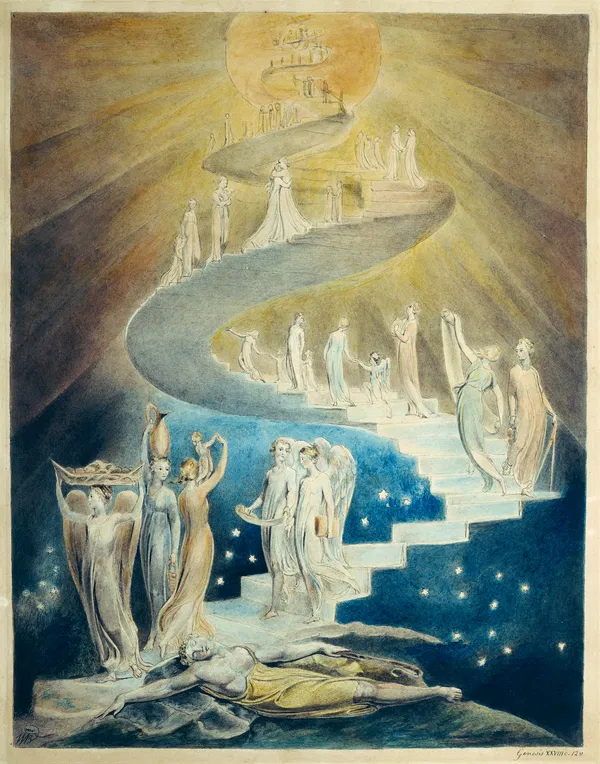 Depth psychology helps us to dream into new ways of looking at the United States’ addiction epidemic, and typology helps to create a container for some of the dynamics occurring within the addiction process. With a multidimensional perspective, mythic aspects of addiction that may not make sense from a medical model, legal perspective, or moral view begin to take on new meaning. While the psyche is too complex to give “one-size-fits-all” solutions, learning how to speak its symbolic language puts us in a better position to decipher its self-loving messages, challenging as they may sometimes be to face. Drawing out the cultural form and psychological character of addiction through type shows how addiction’s distorted sensation-focus is also embedded in and perpetuated by the larger culture. Supported by Jung’s foundational work on psychological types and Beebe’s extrapolated typological model, the individual and culture are offered a map for uncovering biases and blind spots—the wounded and shadow parts that we are most likely to project. With awareness, we might begin to harness the transformative potential of the shadow in order to better meet this complex American crisis.
References
Bedi, A., & Pereira, J. H. (2020). The spiritual paradox of addiction: The call for the transcendent [eBook]. Nicolas-Hays. https://www.everand.com/book/419588363
Hillman, J. (1992). Revisioning psychology. Harper.
Jung, C. G. (1959/1990). The archetypes and the collective unconscious. Taylor & Francis Group.
Jung, C. G. (1921/1971). Psychological types. CW6.
Maté, G. (2010). In the realm of hungry ghosts: Close encounters with addiction (U.S. ed.) [Kindle]. North Atlantic Books.
National Institute on Drug Abuse. (2020, June). Criminal justice drug facts. National Institute on Drug Abuse. https://nida.nih.gov/publications/drugfacts/criminal-justice
Pearl, B. (2018, June 27). Ending the War on Drugs: By the numbers. Center for American Progress. https://www.americanprogress.org/article/ending-war-drugs-numbers/
Rossi, S. (2022). The kore goddess. Winter Press.
Shumate, C. (2021). Projection and personality development via the eight-function model. Routledge.
Von Franz, M.-L., & Hillman, J. (1971). Lectures on Jung’s typology. Spring Publications.
Von Franz, M. (1992). Psyche and matter. Shambhala.
Images
Blake, W. (c. 1805). Jacob’s dream. Retrieved from https://www.blakearchive.org/copy/jerusalem.e?descId=but438.1.wc.01
Dobuzhinsky, M. (1908.) Bridge in London.
Michonze, G. (n.d.) Untitled.
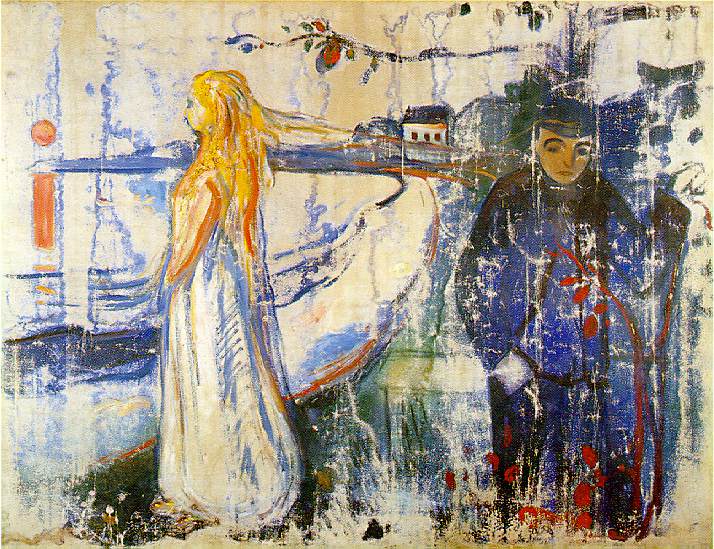
Munch, E. (1894). Separation.
Paalen, W. (1938). Paysage totémique.
Pyle, H. (1909). Once it chased Dr. Wilkerson into the very town itself.
Images courtesy of wikiart.com, except where noted.
Tags